- What an ISO 9001 Gap Analysis Really Helps You Achieve
- Step 1: Get Familiar with ISO 9001:2015 Requirements
- Step 2: Choose the Right ISO 9001 Gap Analysis Tools
- Step 3: Build a Strong Gap Analysis Team
- Step 4: Review Current Processes and Gather Evidence
- Step 5: Document All Gaps Clearly and Systematically
- Step 6: Prioritize Gaps and Build an Action Plan
- Common Gap Areas Organizations Usually Miss
- Turning Gap Analysis Results Into Strong Internal Audit Preparation
- Best Practices for a Smooth ISO 9001 Gap Analysis
- Conclusion: A Solid ISO 9001 Gap Analysis Sets You Up for Audit Success
How to Conduct a Gap Analysis Before Your ISO 9001 Audit
Ever stared at your quality system and thought, “Something feels off… but I can’t point at what exactly”? That tiny discomfort usually shows up right before an audit. And that’s exactly where an ISO 9001 gap analysis steps in like a lifesaver.
This blog gives you a clear, step-by-step way to find what’s missing, what’s working, and what needs quick fixing so your audit doesn’t surprise you later. You’ll learn how to spot gaps, build a solid pre-audit checklist, prepare your team, and use simple tools that make internal audit preparation way easier.
Let’s walk through it together, one clean step at a time.
What an ISO 9001 Gap Analysis Really Helps You Achieve
A good ISO 9001 gap analysis tells you more than just “what’s wrong.” It shows you where your QMS stands today, and how far it is from what auditors expect. Here’s what it really helps you do:
- Pinpoint nonconformities: You get a clear list of areas where your processes, documents, or evidence don’t match ISO 9001:2015 requirements. It removes guesswork and shows exactly what needs attention.
- Highlight improvement areas: Some gaps aren’t full nonconformities but weak spots. This step helps you bring processes, controls, and documentation to a stronger level before the audit.
- Build a reliable pre-audit checklist: With every gap sorted, you now have a practical, ready-to-use pre-audit checklist that guides your entire preparation process.
- Ensure readiness for auditors: Your analysis gives you a clear picture of what auditors will look for, helping you prepare answers, evidence, and process owners with confidence.
- Align with the lead auditor's guide expectations: The results fit naturally into how audits are conducted. When you follow this approach, you stay aligned with how professionals use the lead auditor guide to evaluate systems.
Everything starts with knowing the requirements well. So let’s break those down.
Step 1: Get Familiar with ISO 9001:2015 Requirements
Before reviewing anything, your team needs to understand what ISO 9001 actually asks for. These are the clause groups you must review while doing an ISO 9001 gap analysis:
Clause 4: Context of the organization
You study internal and external factors, define interested parties, and outline the scope of your QMS. This helps you confirm whether your system is built on the right foundation.
Clause 5: Leadership
You check how leadership is involved, how the quality policy is communicated, and whether responsibilities are clearly defined and understood across the company.
Clause 6: Planning
This clause guides you to review risks, opportunities, and quality objectives. You check how well planning activities link to real actions in your QMS.
Clause 7: Support
You review resources, competence, awareness, communication, and documented information. This is where you confirm whether people, tools, and documents are actually supporting the QMS.
Clause 8: Operations
This part covers process controls, production, service delivery, design, and outsourcing. It helps you match daily operations with ISO expectations.
Clause 9: Performance evaluation
You examine monitoring, measurement, customer feedback, internal audits, and management reviews to see how performance is tracked.
Clause 10: Improvement
You look at how nonconformities are handled, how corrective actions are managed, and how improvement is encouraged across processes.
The clause explanations follow the structure recognized by certification bodies and align with the methods used by experienced auditors during formal audits. This ensures accuracy and consistency with global ISO 9001 practices.
Once these clauses are clear, choosing the right tools makes the assessment easier.
Step 2: Choose the Right ISO 9001 Gap Analysis Tools
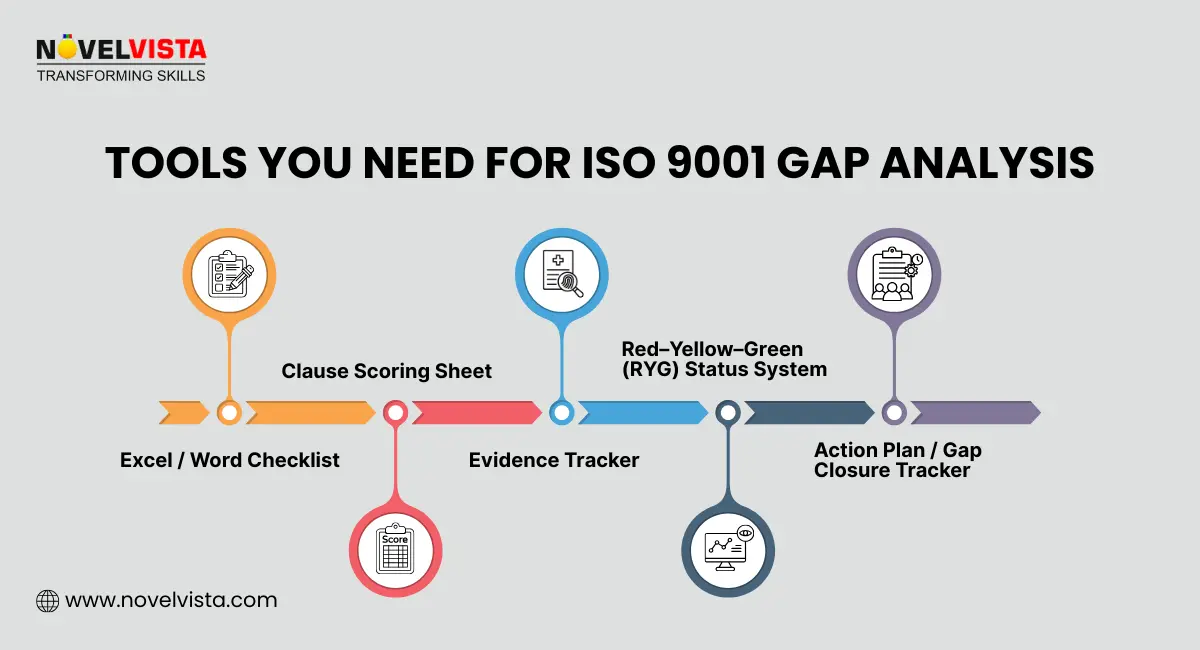 You don’t need fancy software to run a strong ISO 9001 gap analysis. Even simple tools work beautifully when used correctly. These options help you review each clause in a structured way:
1. Excel/Word-based pre-audit checklist templates
These templates help you track every requirement, check compliance levels, and record findings in one place. They make updating and sharing results very convenient.
2. Clause-wise yes/no/partial assessment grids
This tool gives you a quick view of whether each requirement is fully met, partly met, or not met at all. It helps you understand immediate priorities without long explanations.
3. Evidence capture columns
These columns help you list proof for each clause, such as records, reports, process maps, or logs. It keeps all your evidence organized and audit-ready.
4. Simple scoring or traffic-light systems
Using colours like green, yellow, and red helps you see gaps quickly. It makes team discussions easier and helps you decide which areas need urgent fixes.
The tools listed here are the same ones our trainees use during practical audit simulations. They keep the review structured, easy to verify, and aligned with how auditors usually examine compliance.
The next step is about choosing the right people who will run this assessment.
Step 3: Build a Strong Gap Analysis Team
A gap analysis becomes more accurate when the right people run it. Try building a team that represents how your company really works:
1. QMS manager
This person understands the ISO framework, oversees documentation, and guides the whole review. They make sure the process stays aligned with ISO 9001’s structure.
2. Internal auditors
They bring audit skills and help apply the lead auditor guide logic. Their experience allows them to spot gaps others may overlook during internal audit preparation.
3. Key process owners
These people know how work actually happens. Their inputs help confirm whether procedures and real actions match what ISO expects.
4. Cross-functional representatives
Involving someone from HR, IT, admin, or operations adds wider visibility. This helps you see connections between processes and avoid missing important gaps.
With the team ready, it’s time to start gathering real evidence.
Step 4: Review Current Processes and Gather Evidence
Here’s where your ISO 9001 gap analysis moves from theory to actual findings. You want to compare your current practices with the ISO standard using honest observation and documented proof.
1. Interviews and observations
Talk to people handling the processes and watch how the work is done. This helps you verify whether the written procedures match real actions on the ground.
2. Checking procedures, SOPs, and records
Documents show what the company planned, while records show what was actually done. Comparing both reveals where inconsistencies or missing information exist.
3. Mapping evidence against clause requirements
For each clause, match your documents, actions, and records with ISO 9001 expectations. This gives you a clear yes/partial/no result for each requirement.
4. Using lead auditor guide logic: meets / partial / gap
This method helps you keep the analysis structured. You mark each requirement as met, partially met, or not met, based on the evidence collected.
Once evidence is collected, documenting the gaps properly becomes important.
Step 5: Document All Gaps Clearly and Systematically
Clear documentation makes your findings easy to understand and fix. A well-recorded gap helps you build a stronger pre-audit checklist and prepare better for certification.
- Clause reference: Always mention the exact ISO 9001 clause number. This helps you track gaps and align your updates with the standard.
- Current condition: Write a simple description of what is happening today. It gives context and helps the team understand the issue quickly.
- Objective evidence: Add proof like logs, records, reports, screenshots, or observations. Evidence makes the gap valid and audit-ready.
- Impact rating: Rate the gap based on how it affects quality, compliance, or customer trust. This helps you prioritize which actions must happen first.
- Notes on process or compliance risk: Add small remarks on what risk the gap creates. It helps decision-makers understand why the issue matters.
This gap documentation format is widely used by certified auditors and is the same approach we teach during audit exercises. It keeps results transparent, traceable, and easy to act upon.
Step 6: Prioritize Gaps and Build an Action Plan
Once the gaps are recorded, the next move is turning them into a simple, workable action plan. This is where your ISO 9001 gap analysis becomes truly helpful because it converts findings into clear steps your team can follow.
1. Priority setting based on risk
Sort your gaps into high, medium, and low categories depending on how they affect product quality, customer trust, or compliance. This avoids wasting time on areas that don’t impact your audit much.
2. Assigning owners and timelines
Every gap needs a clear owner and a realistic timeline. When you assign a name and date, the chances of closing the gap properly become much higher and easier to track.
3. Updating the pre-audit checklist
Add each completed action into your pre-audit checklist so your internal audit preparation stays organised. This helps you quickly see what’s done, what’s pending, and what needs a fresh review.
4. Ensuring readiness for certification audits
Once actions are closed, recheck everything using the same clause-wise method. This builds confidence for the certification audit and keeps you aligned with the lead auditor guide approach.
All this naturally leads to certain clauses that deserve extra focus because they usually hold the most surprises.
Common Gap Areas Organizations Usually Miss
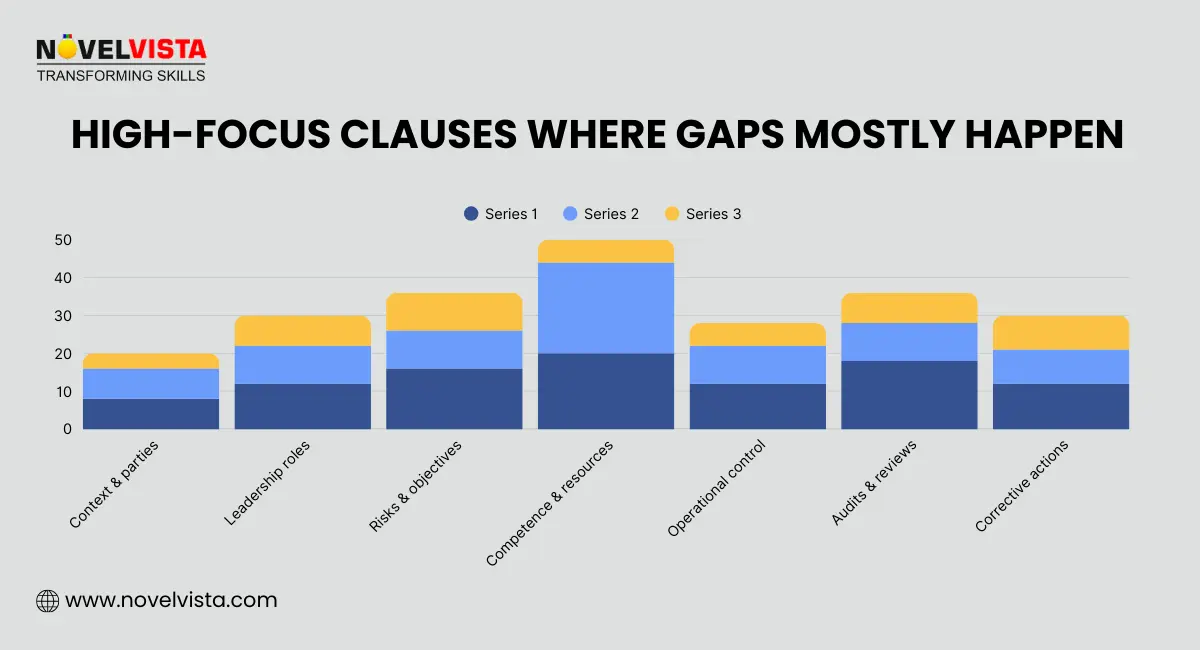
While teams try to follow ISO 9001 thoroughly, certain issues slip through without being noticed. These are the silent gaps that appear during audits again and again.
- Weak or unclear leadership responsibilities: Leaders may approve the policy but not actively participate in QMS activities. This becomes obvious during interviews and audit discussions.
- Missing risk-based thinking: Risks are sometimes written down only for the audit and not used in real decisions, planning, or objective setting.
- Poorly maintained, documented information: Documents may be outdated, duplicated, or not aligned with the latest process changes. Auditors quickly spot these mismatches.
- Ineffective internal audit programs: Some internal audits are too superficial, checklist-based, or not backed by solid evidence. This makes internal audit preparation weak and unreliable.
- No structured management review evidence: Management review meetings may happen, but without proper records, follow-up actions, or analysis of inputs like audits, customer feedback, or performance data.
This approach mirrors how certified auditors convert findings into audit focus points. It ensures your internal audit follows a professional structure and stays aligned with ISO 9001 expectations.
Also Read: Non-Conformities in ISO 9001 and how to fix them
Turning Gap Analysis Results Into Strong Internal Audit Preparation
Your ISO 9001 gap analysis sets the perfect foundation for a well-planned internal audit. When your team knows the gaps, the audit becomes smoother, more focused, and much easier to handle.
1. Convert gaps to audit focus points
Each gap becomes an area your internal auditors can dive deeper into. This creates a more meaningful audit instead of a checkbox exercise.
2. Verify corrective actions
Your team can recheck whether actions have actually worked or if some areas need more attention or additional evidence.
3. Strengthen the pre-audit checklist
By adding all updates to your pre-audit checklist, you create a clear roadmap for your internal audit preparation.
4. Align processes with the expectations of the lead auditor guide
When you structure your findings, evidence, and actions in a clear way, your system matches the structure auditors expect, making their evaluation easier.
This flows perfectly into a few best practices that keep the entire gap analysis smooth and organised.
Best Practices for a Smooth ISO 9001 Gap Analysis
Here are simple habits that make your ISO 9001 gap analysis stronger and more reliable:
- Use standardized templates: Templates keep your team consistent and ensure that no clause or requirement is missed during the review.
- Ensure evidence-based documentation: Write only what you can prove. Evidence-backed results make your findings trusted and audit-ready.
- Involve the right team early: When people join the analysis early, they understand the requirements better and avoid last-minute confusion.
- Review and iterate before facing external auditors: One cycle of review helps, but two cycles make your system stronger. This builds confidence before the certification audit.
These habits make a big difference, especially for professionals who work with audits regularly.
Download: Pre-Audit Power Checklist
Get a one-page, ready-to-use checklist to make your organization
audit-ready anytime. Stay organized, avoid last-minute stress,
and walk into audits with confidence.
Conclusion: A Solid ISO 9001 Gap Analysis Sets You Up for Audit Success
Here are simple habits that make your ISO 9001 gap analysis stronger and more reliable:
- Use standardized templates: Templates keep your team consistent and ensure that no clause or requirement is missed during the review.
- Ensure evidence-based documentation: Write only what you can prove. Evidence-backed results make your findings trusted and audit-ready.
- Involve the right team early: When people join the analysis early, they understand the requirements better and avoid last-minute confusion.
- Review and iterate before facing external auditors: One cycle of review helps, but two cycles make your system stronger. This builds confidence before the certification audit.
These habits make a big difference, especially for professionals who work with audits regularly.

Frequently Asked Questions
Author Details

Course Related To This blog
ISO 9001:2015 Lead Auditor Training and Certification
Confused About Certification?
Get Free Consultation Call