- Understanding the Role of an ISO 9001 Lead Auditor
- ISO 9001 Lead Auditor Common Mistakes – And What to Do Instead
- What ISO 9001 Lead Auditors Should Really Focus On
- How Organizations Can Avoid These ISO 9001 Audit Pitfalls
- Advice for ISO 9001 Lead Auditors
- Conclusion
- Next Step: Strengthen Your ISO 9001 Lead Auditor Skills
When ISO 9001 audit mistakes happen, they don’t just affect the audit report. They damage credibility, weaken trust, confuse leadership, and sometimes even put certification at risk. Many audits fail to deliver real value, not because organizations are weak, but because auditors miss what truly matters.
This guide helps lead auditors to stay aware, avoid common gaps, and perform audits that actually improve business performance, not just tick compliance boxes.
What you’ll get from this guide
- Clear awareness of real-life ISO 9001 audit mistakes
- How to avoid lead auditor errors during audits
- Auditor best practices to stay confident and credible
- Guidance to develop the right mindset as a professional auditor
Understanding the Role of an ISO 9001 Lead Auditor
Before talking about ISO 9001 audit mistakes, it’s important to understand what a lead auditor is really meant to do. The job is not to “hunt” companies or play compliance police. It’s to protect the intent of ISO 9001 and ensure organizations truly benefit from the standard.
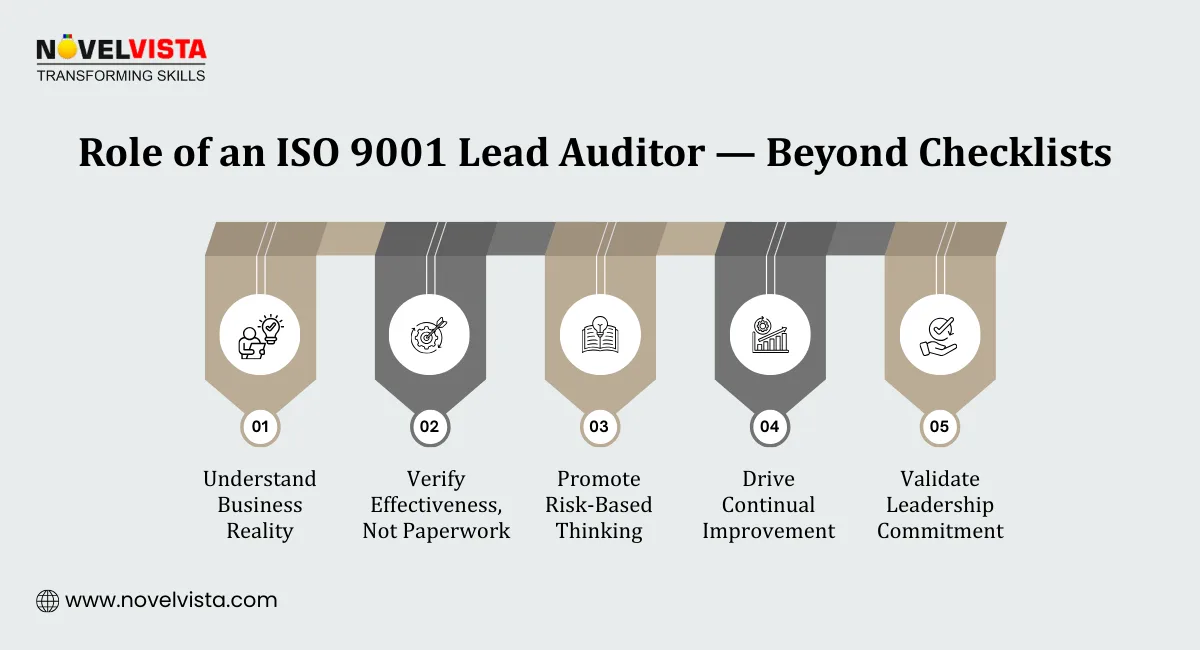
A strong lead auditor should focus on
- Looking beyond checklists and paperwork
- Understanding how processes really work day-to-day
- Checking whether risks, data, and actions drive decisions
- Ensuring quality is part of culture, not just documentation
When auditors step in with the right mindset, the audit becomes meaningful, fair, and impactful.
ISO 9001 Lead Auditor Common Mistakes – And What to Do Instead
Here are the most common ISO 9001 audit mistakes that lead auditors to make, why they happen, and what to do instead. These are seen frequently across industries and certification audits.
These are not theoretical problems. These ISO 9001 audit mistakes come from real audits conducted across different industries, surveillance audits, certification journeys, and auditor discussions.
Training sessions, audit simulations, and real audit reviews continuously highlight how these mistakes repeat when auditors rush, rely only on documents, or misunderstand intent.
3.1 Misunderstanding Organizational Context
Mistake:
Many auditors jump directly into clauses and procedures without truly understanding the organization’s business environment, risks, challenges, and objectives. This is one of the most repeated lead auditor errors, and it weakens the entire audit.
What to do instead:
Spend time understanding internal issues, market conditions, customers, regulatory pressures, business strategy, and stakeholder expectations. When context is clear, audit findings become more meaningful and aligned with reality.
3.2 Over-Emphasizing Documentation Instead of Reality
Mistake:
Treating the audit as a paperwork inspection. Some auditors focus so much on documents that they forget ISO 9001 is about real implementation, real processes, and real outputs. This is one of the most damaging ISO 9001 audit mistakes because it creates a false sense of compliance.
What to do instead:
Validate whether controls are working in real life. Check employee understanding, system behavior, execution flow, and output quality. Documentation supports the system—it is not the system.
3.3 Ignoring Risk-Based Thinking and Performance Data
Mistake:
Some auditors review clauses, policies, and procedures but ignore how risks, KPIs, and performance data actually drive decisions. When risk-based thinking is ignored, audits lose their strategic value.
What to do instead:
Review risk registers, trend charts, dashboards, and decision logs. Check whether risks are identified, monitored, and reduced. Strong auditor best practices include connecting risks with operations and outcomes.
3.4 Weak Corrective Action and CAPA Evaluation
Mistake:
Accepting shallow corrective actions like “training given” or “procedure updated” without checking whether the real root cause is addressed. This is one of the most common lead auditor errors during audits.
What to do instead:
Look for real root cause analysis. Check whether actions prevent recurrence and whether effectiveness is verified. Good auditors challenge weak CAPA responses politely but firmly.
3.5 Poor Training and Competence Verification
Mistake:
Only verifying training records and certificates without checking whether employees can actually perform their job competently. This leads to misleading compliance.
What to do instead:
Talk to people. Ask what they do, how they do it, what tools they use, and why the process matters. This removes superficial auditing and prevents ISO 9001 audit mistakes linked to competence assessment.
3.6 Ignoring Leadership Engagement
Mistake:
Some auditors interact only with quality teams and never properly engage with top management. That leads to an incomplete judgment about commitment and accountability.
What to do instead:
Meet leadership. Check their involvement, understanding of risks, quality objectives, and improvement actions. Real ISO 9001 strength always starts from leadership.
3.7 Accepting Superficial Internal Audits
Mistake:
Allowing organizations to pass with weak, checkbox-style internal audits that identify no real findings.
What to do instead:
Assess depth, objectivity, and maturity of internal audits. Strong auditor best practices include checking whether internal audits actually improve the system.
Everything shared here is based on practical ISO 9001 Lead Auditor experience, case studies discussed in professional auditor communities, and learning from auditors who manage real certification cycles. These insights help auditors stay grounded, realistic, and aligned with how ISO 9001 truly works inside organizations.
ISO 9001 Non-Conformity Correction Toolkit
Your Practical, Step-By-Step Companion for
Fixing Quality Issues the Right Way
What ISO 9001 Lead Auditors Should Really Focus On
To avoid ISO 9001 audit mistakes, lead auditors should stay aligned with what truly matters in a quality management system. The goal is not to “hunt faults”, but to check whether the system genuinely works for the organization.
Here’s where the focus should stay strong:
- Real Integration of QMS in Daily Work: Don’t just see documents. Check whether teams actually follow processes and whether the QMS supports real business operations instead of existing only for certification.
- Risk-Based Thinking in Practice: One of the biggest lead auditor errors is checking only documented risks. Confirm whether risk awareness influences decisions, planning, improvements, and resource allocation.
- True Continual Improvement: Continual improvement should not be “one meeting topic”. Verify whether CAPA outcomes, lessons learned, and data trends are driving positive change.
- Strong Process Approach: Avoid silo auditing. See how processes connect, flow, and support outcomes. This is one of the most powerful auditor best practices.
- Customer Focus at the Core: Check whether quality connects clearly to customer value, satisfaction, and feedback handling.
- Clear Awareness Across Teams: Beyond leadership, employees should understand roles, policy, objectives, and their purpose in QMS success.
This approach reduces ISO 9001 audit mistakes and builds true audit credibility.
Get fully audit-ready with confidence. Read our blog on the ISO 9001 Lead Auditor Checklist to see what to review, verify, and prepare before the final audit.How Organizations Can Avoid These ISO 9001 Audit Pitfalls
ISO 9001 audits should never feel like punishment. Organizations can avoid most ISO 9001 audit mistakes by approaching audits with maturity and openness.
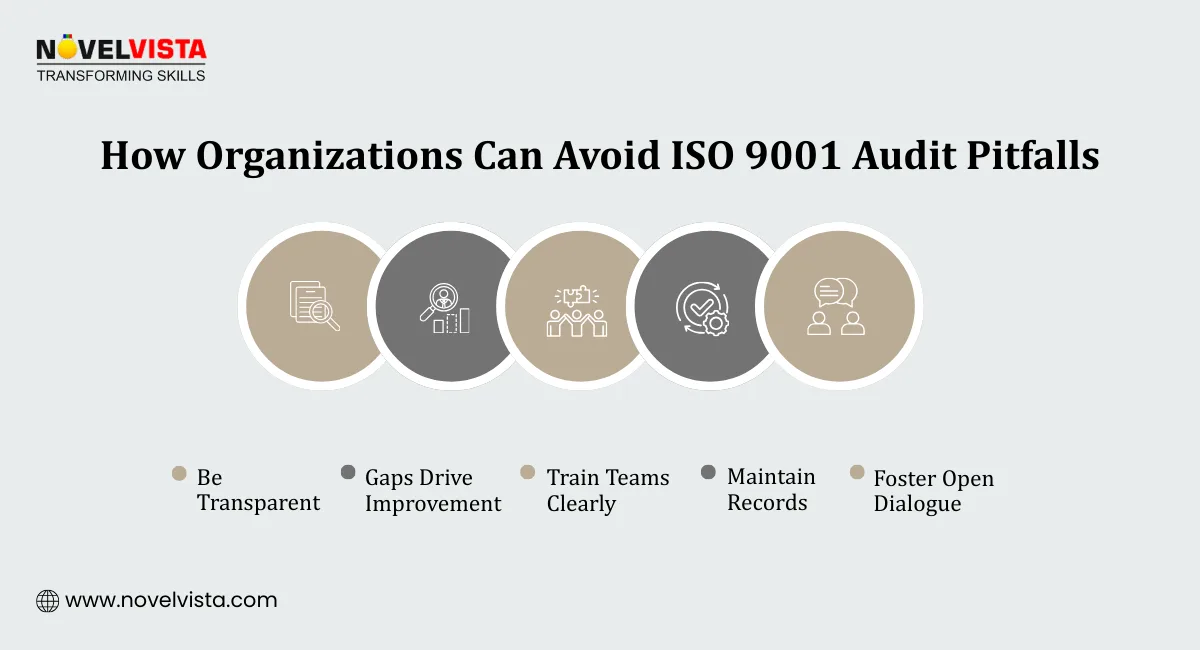
Here’s how organizations can stay stronger:
- Be Transparent: Hiding gaps creates risk. Show the truth. Gaps allow improvement and help strengthen systems.
- Use Auditors as Knowledge Partners: Good audits are learning opportunities. Ask questions. Discuss improvements. Engage constructively.
- Stay Calm and Professional: Nonconformities do not mean failure. They mean growth. Panic only leads to rushed responses.
- Stay Prepared and Updated: Updated documents, trained employees, and working processes automatically reduce lead auditor errors and improve outcomes.
When organizations work with clarity, auditor best practices become easier to apply.
Advice for ISO 9001 Lead Auditors
If you want to avoid repeated ISO 9001 audit mistakes, the mindset matters more than the checklist. Strong auditors build trust, clarity, and meaningful business value.
A few simple but powerful reminders:
- Move from compliance policing to business value auditing
- Focus on truth, fairness, and practical outcomes
- Stay ethical, confident, and objective
- Strengthen communication and clarity at every stage
- Practice strong auditor best practices to avoid costly lead auditor error
When this mindset is applied, certification becomes meaningful instead of mechanical.
Conclusion
Most ISO 9001 audit mistakes can be prevented with awareness, discipline, and the right approach. When lead auditors focus on reality instead of only documents, apply strong risk-based thinking, verify competence, and ensure leadership involvement, audits become more powerful and respected. In short, better auditing creates stronger organizations, better decisions, and higher trust.
This guidance is built from structured auditor training, feedback from certified professionals, real audit simulations, and continual updates aligned with ISO 9001 expectations. The intention is simple: help Lead Auditors build confidence, avoid repeating mistakes, and deliver audits that genuinely improve organizations.

Next Step: Strengthen Your ISO 9001 Lead Auditor Skills
If you want to grow beyond common ISO 9001 audit mistakes and become a confident, credible auditor, NovelVista’s ISO 9001 Lead Auditor Certification Training is a great next move. It helps you master real audit execution, avoid lead auditor errors, apply auditor best practices, and lead audits that deliver real business value. Build stronger judgment, sharper audit capability, and higher professional confidence with expert-led learning.
Frequently Asked Questions
Author Details

Course Related To This blog
ISO 9001:2015 Lead Auditor Training and Certification
Confused About Certification?
Get Free Consultation Call