Cloud computing is no longer just an IT enabler—it has become the backbone of digital transformation across industries. As we move closer to 2026, the pace of innovation in the cloud ecosystem is accelerating faster than ever. According to recent industry reports, the global cloud computing market is expected to exceed $1 trillion by 2027, driven by AI workloads, data-intensive applications, and enterprise modernization initiatives. Over 90% of organizations worldwide already use cloud services in some form, and many are now shifting their focus from adoption to optimization and innovation.
So, what’s next?
Which cloud technologies will dominate enterprise strategies?
How will cloud computing trends 2026 differ from what we see today?
To answer these questions, it’s important to first understand how cloud computing trends 2025 set the foundation for the next phase of growth—and how businesses can prepare for the future. In this blog, we explore the top cloud computing trends shaping both 2025 and 2026, offering practical insights into where the cloud industry is headed and why it matters.
Cloud Computing in Transition: From 2025 to 2026
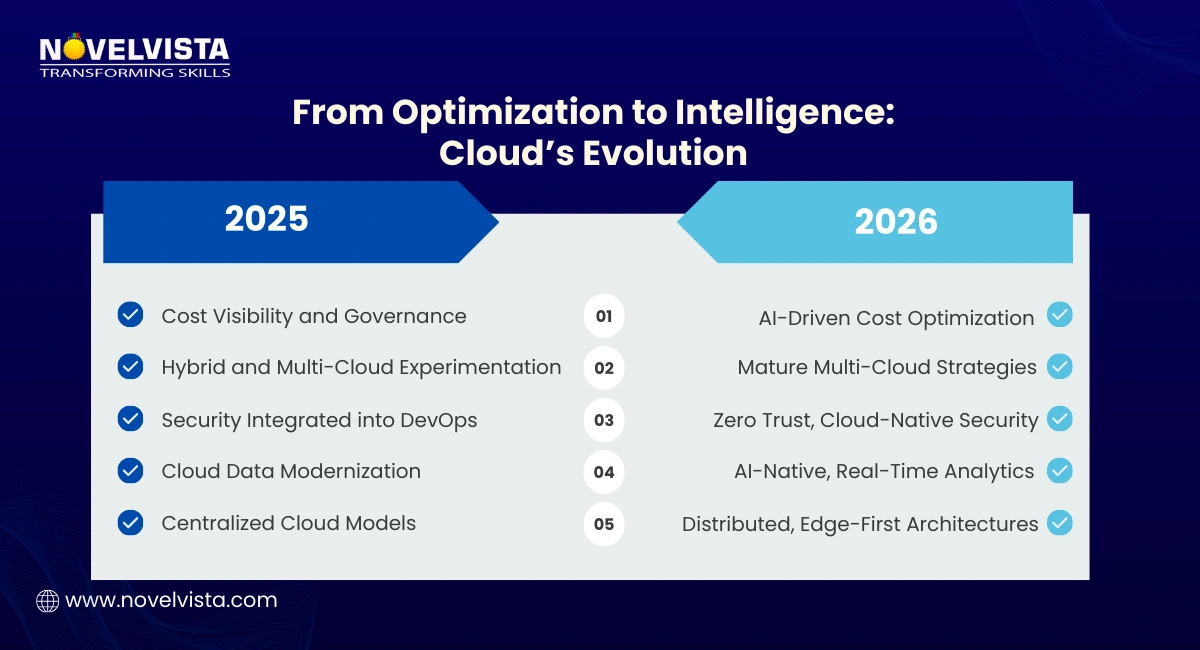
The year 2025 marked a turning point in cloud maturity. Enterprises moved beyond basic migration and focused on efficiency, governance, and intelligent workloads. Cloud computing market trends 2025 highlighted a strong push toward hybrid and multi-cloud environments, as organizations sought flexibility and resilience. At the same time, cloud-native security, cost optimization frameworks like FinOps, and AI-powered services became mainstream.
However, these developments were just the beginning. The cloud computing industry trends 2026 build upon this momentum, introducing deeper automation, industry-specific platforms, sustainability initiatives, and distributed cloud models. As cloud providers and enterprises innovate together, the cloud is evolving into an intelligent, adaptive ecosystem rather than a static infrastructure layer.
Top 10 Cloud Computing Trends 2026
1. AI-First Cloud Platforms Take Center Stage
One of the most defining cloud computing trends 2026 is the rise of AI-first cloud platforms. While 2025 focused on running AI workloads in the cloud, 2026 emphasizes cloud platforms that are inherently intelligent. AI is being embedded into core cloud services—ranging from infrastructure management and security monitoring to application development and analytics.
This shift represents a major leap in cloud computing innovation, enabling organizations to automate decisions, predict system behavior, and deliver personalized digital experiences at scale.
2. Multi-Cloud Strategies Become the Enterprise Standard
Multi-cloud adoption is no longer optional—it’s becoming the default approach. Organizations are increasingly using multiple cloud providers to avoid vendor lock-in, meet regulatory requirements, and improve availability. These cloud computing industry trends 2026 are driving demand for unified management tools that provide visibility, governance, and security across diverse cloud environments.
Compared to cloud computing trends 2025, where experimentation with multi-cloud was common, 2026 marks a phase of standardization and maturity.
3. FinOps and Intelligent Cost Optimization
As cloud spending continues to rise, cost management remains a top priority. Cloud computing market trends 2026 show that organizations are adopting advanced FinOps practices supported by AI-driven insights. These tools help predict usage patterns, optimize resource allocation, and align cloud investments with business outcomes.
This evolution builds directly on cloud computing market trends 2025, where visibility into cloud costs was the primary goal. In 2026, the focus shifts to proactive, automated optimization.
4. Rise of Industry-Specific Cloud Platforms
Generic cloud solutions are giving way to vertical cloud platforms tailored for industries like healthcare, finance, manufacturing, and retail. These platforms come with built-in compliance, security, and data models aligned with industry regulations. As part of the latest trends in cloud computing 2026, vertical clouds help organizations accelerate digital transformation while reducing complexity.
This trend reflects a broader move toward specialization within the cloud ecosystem. In line with cloud computing trends 2026, an AWS study guide helps learners systematically build the skills needed to design, manage, and optimize modern cloud environments.
5. Edge Computing and Distributed Cloud Expansion
Edge computing continues to gain momentum as enterprises demand real-time processing and low-latency experiences. In 2026, edge and distributed cloud models will play a critical role in supporting IoT, 5G, and AI-driven applications. These cloud technology trends enable data to be processed closer to the source while still being centrally managed through cloud platforms.
Compared to earlier cloud computing trends 2025, edge computing in 2026 is more integrated, secure, and scalable.
6. Cloud-Native Security and Zero Trust Architectures
Security remains a central concern as cloud environments grow more complex. One of the most important cloud computing trends 2026 is the adoption of Zero Trust security models combined with cloud-native security tools. Identity-first approaches, continuous monitoring, and automated compliance checks are becoming standard features across cloud platforms.
This evolution aligns with latest trends in cloud computing 2025, where security shifted left into development pipelines.
7. Serverless and Event-Driven Architectures Go Mainstream
Serverless computing is no longer limited to niche use cases. In 2026, event-driven and serverless architectures are becoming a core part of enterprise application strategies. These top cloud computing trends reduce operational overhead, improve scalability, and enable faster innovation.
By building on the momentum of cloud computing industry trends 2025, organizations are now confidently deploying mission-critical workloads using serverless models.
8. Sustainable and Green Cloud Computing
Sustainability is emerging as a strategic priority across industries. Cloud computing market trends 2026 emphasize energy-efficient data centers, carbon-aware workloads, and sustainability reporting tools. Cloud providers are investing heavily in renewable energy and offering customers insights into the environmental impact of their cloud usage.
This trend reflects growing alignment between cloud technology and ESG goals. As cloud computing trends 2026 continue to evolve, understanding what is AWS Certification helps professionals build foundational cloud skills and validate their knowledge of modern cloud technologies.
9. Platform Engineering and Internal Developer Platforms
Developer experience is becoming a competitive advantage. As part of ongoing cloud computing innovation, organizations are adopting internal developer platforms (IDPs) to streamline workflows and standardize environments. Platform engineering teams create reusable templates, tools, and guardrails that empower developers while maintaining governance.
These cloud technology trends support faster delivery without compromising security or compliance.
10. Cloud-Native Data and Analytics Ecosystems
Data continues to fuel digital transformation. In 2026, cloud-native data platforms enable real-time analytics, AI-driven insights, and seamless integration across systems. These latest trends in cloud computing 2026 allow organizations to turn vast amounts of data into actionable intelligence.
This trend builds on cloud computing trends 2025, where data modernization was a key focus area. As cloud computing trends 2026 accelerate cloud adoption, AWS Certification salary insights highlight the growing value of certified cloud skills.
Access the Cloud Skills Guide for 2026
- Gain insight into in-demand cloud technologies
- Learn which skills matter most in real-world roles
- Stay relevant in rapidly evolving cloud ecosystem
What Cloud Computing Trends 2026 Mean for Businesses
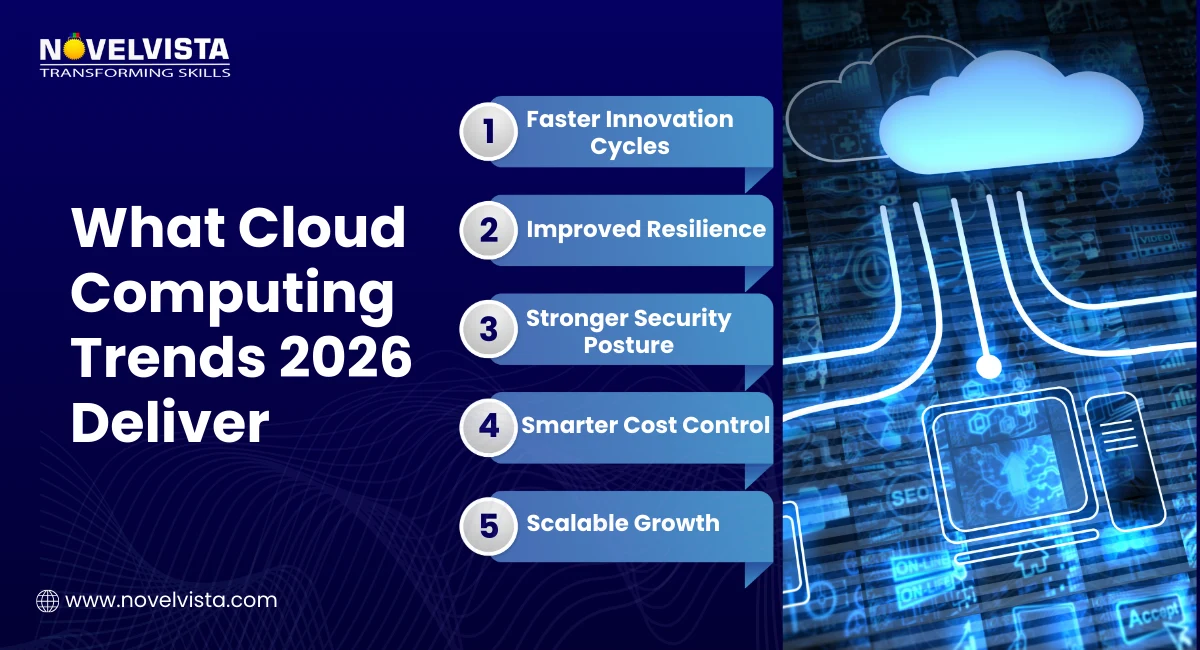
The impact of cloud computing trends 2026 goes beyond technology. Businesses that align with these trends can achieve faster innovation cycles, improved resilience, stronger security postures, and better cost control. Cloud is no longer just an IT decision—it’s a business strategy that influences growth, agility, and competitiveness.
Organizations that fail to adapt risk falling behind in an increasingly cloud-driven digital economy.
Preparing for Cloud Computing Trends 2026
To stay ahead, businesses must invest in cloud skills, modern architectures, and governance frameworks. Upskilling teams, embracing automation, and tracking cloud computing industry trends 2026 are essential steps. Strategic planning today will determine how successfully organizations leverage the cloud in the years ahead.
Conclusion
The future of the cloud is intelligent, distributed, secure, and sustainable. As cloud computing trends 2026 continue to evolve, organizations must move beyond basic adoption and embrace innovation-driven strategies. By understanding the trajectory from cloud computing trends 2025 to 2026, businesses and professionals can make informed decisions that ensure long-term success.
The cloud journey is far from over—it’s entering its most exciting phase yet.
As cloud computing trends 2026 reshape modern IT architectures, developing strong cloud design skills is essential. NovelVista’s AWS Solutions Architect – Associate Certification Training equips you with practical knowledge to design secure, scalable, and cost-effective AWS solutions aligned with today’s cloud innovations. Ideal for IT and cloud professionals, this course helps you build real-world expertise and earn an industry-recognized credential to stay competitive in the evolving cloud ecosystem.
Start your AWS Solutions Architect journey
Frequently Asked Questions
Author Details

Confused About Certification?
Get Free Consultation Call