Projects rarely fail because teams lack talent. They fail because requirements change, priorities shift, and long planning cycles make delivery painfully slow. That is exactly why Agile Methodologies became popular. Instead of waiting months to deliver a final product, teams break work into smaller iterations and release improvements continuously.
Agile Methodologies help teams deliver working solutions faster while adapting to feedback and changing requirements. Rather than following rigid plans, Agile encourages collaboration, experimentation, and continuous improvement.
This guide explains What are Agile Methodologies, how they work in real projects, and the Types of Agile Methodologies organizations use today to deliver software and manage projects effectively.
TL;DR – Agile Methodologies at a Glance
Area |
Summary |
| Purpose | Agile Methodologies help teams deliver projects through small, iterative development cycles |
| Core Idea | Continuous feedback, collaboration, and flexible planning |
| Common Frameworks | Scrum, Kanban, XP, Lean, Crystal, FDD, DSDM, SAFe |
| Workflow | Backlog → Sprint planning → Development → Review → Retrospective |
| Key Benefit | Faster delivery, improved collaboration, and ability to adapt to change |
Agile originated from the Agile Manifesto in 2001, which emphasized customer collaboration, working software, and adaptability over rigid planning. In Agile workshops delivered across software and product teams, most participants report faster feedback cycles within 2–3 sprints after adopting iterative delivery and structured backlog prioritization practices.
Agile Methodologies Meaning and Core Principles
To understand why Agile became so popular, it helps to look at the Agile methodologies meaning and how it differs from traditional project management models.
Traditional approaches like the waterfall model follow a strict sequence:
- Planning
- Design
- Development
- Testing
- Deployment
While structured, this approach often struggles when requirements change during the project. Agile Methodologies solve this problem by dividing projects into smaller cycles where teams can adjust priorities as they progress.
Core Principles Behind Agile
The Agile Manifesto introduced principles that guide modern Agile Methodologies.
1. Deliver Working Solutions Frequently
Instead of waiting months for a final product, Agile teams release working increments regularly.
Benefits include:
- Faster feedback from stakeholder
- Early detection of issues
- Continuous improvement in each iteration
This frequent delivery approach makes Agile Methodologies more adaptable than traditional models. In practical Agile implementation workshops, teams transitioning from waterfall often reduce feature delivery cycles from 8–12 weeks to 2–3 week iterations after adopting sprint-based delivery models.
2. Encourage Collaboration
Agile places strong emphasis on collaboration between:
- Developers
- Product owners
- Stakeholders
- Customers
Regular meetings and open communication ensure everyone stays aligned with project goals.
3. Adapt to Changing Requirements
In many projects, requirements evolve during development. Instead of resisting change, Agile Methodologies allow teams to adjust priorities through backlog updates and sprint planning.
This flexibility helps teams deliver solutions that truly meet user needs.
4. Continuous Improvement
Agile teams regularly reflect on their processes. Retrospective meetings allow teams to:
- Identify what worked well
- Discuss challenges
- Improve workflows in the next iteration
Over time, these improvements increase efficiency and product quality.
Download: Agile Framework Selection Guide
Learn how to choose the right Agile framework by comparing Scrum, Kanban, XP, Lean, and SAFe based on team size, workflow style, and project complexity.
Types of Agile Methodologies
While the Agile philosophy remains consistent, different frameworks implement it in different ways. These frameworks represent the Types of Agile Methodologies organizations can adopt, depending on team structure and project complexity.
Some frameworks emphasize strict roles and ceremonies, while others focus on workflow visualization or engineering practices.
The most widely used Agile Methodologies include:
- Scrum
- Kanban
- Extreme Programming (XP)
- Lean
- Crystal
- Feature Driven Development (FDD)
- Dynamic Systems Development Method (DSDM)
- Scaled Agile Framework (SAFe)
Each of these Types of Agile Methodologies supports iterative development while providing unique tools and practices.
Understanding the Different Agile Methodologies helps organizations choose the framework best suited for their projects.
Popular Agile Methodologies and Their Key Characteristics
Among the many Different Agile Methodologies, a few frameworks dominate modern software development environments.
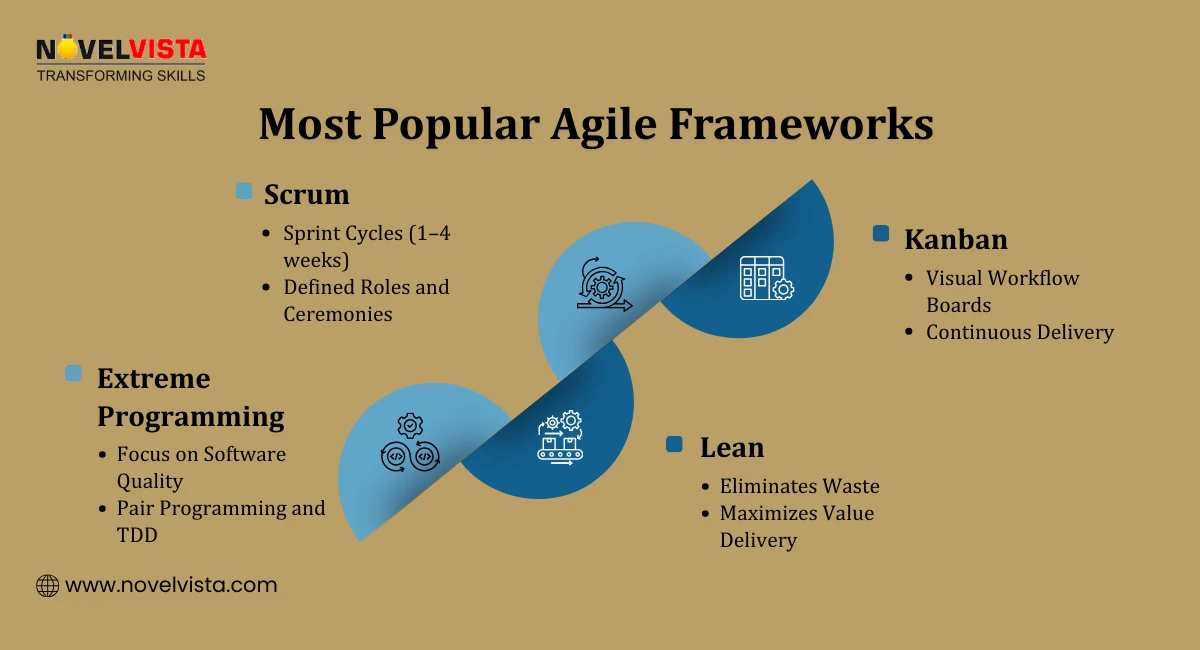
Let’s look at the most widely used approaches and how they function in real projects.
1. Scrum
Scrum is the most widely adopted framework among the Types of Agile Methodologies. It organizes development into short cycles called sprints, typically lasting between one and four weeks.
Key Scrum Roles
Scrum teams usually include three primary roles:
- Product Owner: Responsible for prioritizing features and managing the product backlog.
- Scrum Master: Facilitates the Scrum process and removes obstacles for the team.
- Development Team: Builds and delivers the product during each sprint.
Scrum Ceremonies
Scrum also includes structured meetings that keep the team aligned. Common Scrum events include:
- Sprint Planning – defining tasks for the upcoming sprint
- Daily Stand-up – short meetings to track progress
- Sprint Review – demonstrating completed work
- Sprint Retrospective – improving the process
Scrum works best for product development teams with 5–9 members. In Scrum Master certification sessions, structured sprint ceremonies often improve team visibility and task completion accuracy by around 30% during the first three sprint cycles.
2. Kanban
Kanban is another widely used framework among the Different Agile Methodologies. Unlike Scrum, Kanban does not rely on fixed sprint cycles.
Instead, it focuses on visualizing work and improving workflow efficiency.
Key Characteristics of Kanban
Kanban teams use visual boards that show tasks moving through stages such as:
- To Do
- In Progress
- Testing
- Done
This workflow visualization helps teams quickly identify bottlenecks.
Work-in-Progress Limits
Kanban introduces WIP limits, which restrict the number of tasks allowed in each stage.
This prevents teams from taking on too many tasks simultaneously and helps maintain steady progress.
Organizations adopting Kanban often report 30–50% improvement in workflow throughput. Because of its flexibility, Kanban works well for support teams, operational workflows, and continuous delivery environments.
Extreme Programming (XP)
Extreme Programming, commonly called XP, focuses heavily on improving software quality. Among the Types of Agile Methodologies, XP emphasizes engineering practices that reduce defects and improve reliability
Key XP Practices
XP introduces several technical practices designed to improve code quality. Common practices include:
- Pair Programming – two developers work together on the same code
- Test-Driven Development (TDD) – writing tests before code
- Continuous Integration – merging and testing code frequently
- Frequent releases
In engineering-focused Agile training environments, teams adopting test-driven development and continuous integration frequently reduce post-release defects by 30–45% within the first few development cycles.
Lean
Lean software development is another framework within the Types of Agile Methodologies. Lean focuses on maximizing value while removing unnecessary activities.
Lean Principles
Lean Agile development emphasizes:
- Eliminating waste in processes
- Delivering value quickly
- Improving workflows continuously
Examples of waste Lean tries to remove include:
- Unnecessary documentation
- Waiting time between processes
- Rework caused by poor communication
Organizations using Lean practices often report a 20–50% reduction in development cycle time.
Crystal
Crystal is one of the more flexible frameworks among the Different Agile Methodologies. Instead of enforcing strict rules, Crystal adapts its practices depending on the size of the team and the complexity of the project.
The main idea behind Crystal is simple: teams should use the lightest process possible while still maintaining productivity and quality.
Key Characteristics of Crystal
Crystal frameworks vary based on project size and importance. For example:
- Crystal Clear – used for small teams of 6–8 members
- Crystal Yellow or Orange – used for larger teams or more complex projects
Crystal encourages:
- Frequent communication among team members
- Continuous improvement of processes
- Close collaboration between developers and stakeholders
Because of its flexibility, Crystal is often used by smaller teams that need lightweight project management practices within Agile Methodologies.
Feature Driven Development (FDD)
Feature Driven Development is another approach among the Types of Agile Methodologies. Instead of organizing development around sprints or workflow boards, FDD focuses on delivering small, client-valued features.
Each feature typically represents a specific functionality that can be developed and delivered independently.
Key Characteristics of FDD
FDD projects usually follow these stages:
- Develop an overall model of the system
- Build a list of prioritized features
- Plan development based on features
- Design each feature
- Build each feature iteratively
This structured workflow makes FDD suitable for large systems where many individual features need to be developed and tracked.
FDD is commonly used in enterprise development environments where planning and feature tracking are important but teams still want the flexibility of Agile Methodologies.
Dynamic Systems Development Method (DSDM)
Dynamic Systems Development Method, often called DSDM, is another framework within the Different Agile Methodologies ecosystem.
DSDM focuses strongly on delivering working solutions within fixed timelines while allowing scope to evolve.
Key Principles of DSDM
DSDM emphasizes several important practices:
- Timeboxing – dividing development into fixed time periods
- Active user involvement – continuous collaboration with stakeholders
- Frequent testing and validation
Projects using DSDM prioritize delivering business value early while maintaining strict time constraints.
Because of this structure, DSDM works well for projects that require rapid development but still need formal governance within Agile Methodologies.
Scaled Agile Framework (SAFe)
Most Agile frameworks were originally designed for small teams. However, large enterprises often need Agile practices across hundreds or even thousands of developers.
The Scaled Agile Framework (SAFe) addresses this challenge by extending Agile Methodologies across multiple teams and departments.
Key Elements of SAFe
SAFe introduces structured coordination mechanisms across large organizations. Key components include:
- Agile Release Trains (ARTs) – groups of teams delivering value together
- Program Increment planning – coordinating work across teams
- Enterprise-level Agile governance
This structure helps large organizations maintain alignment while scaling Agile Methodologies across multiple teams.
Enterprise adoption is growing rapidly.
How Agile Methodologies Work in Practice
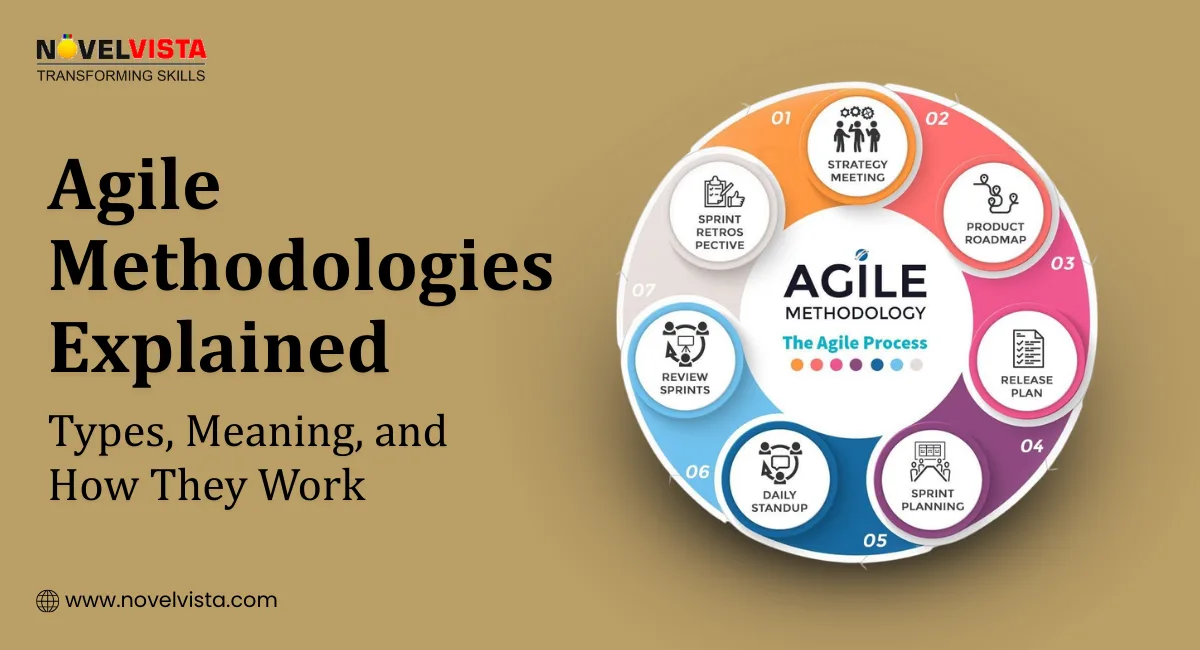
Although the Different Agile Methodologies vary in structure, most Agile workflows follow a similar iterative process.
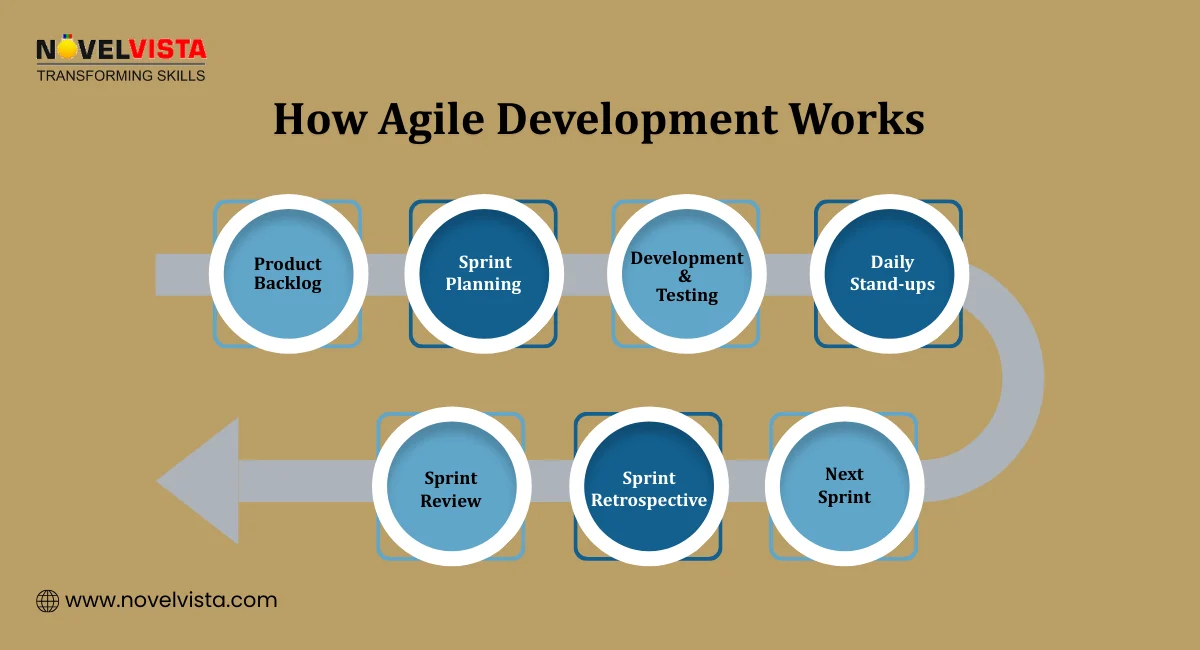
Instead of delivering a complete product at the end of the project, Agile teams deliver smaller increments of working functionality.
Typical Agile Development Workflow
Most Agile Methodologies follow a process similar to the one below.
Step 1: Create a Product Backlog
The product backlog contains a prioritized list of tasks or features. These tasks are often written as user stories, which describe functionality from the user’s perspective.
Example:
- “As a customer, I want to track my order so that I know when it will arrive.”
Step 2: Sprint Planning
During sprint planning, the team selects a set of backlog items to complete during the next iteration.
A typical sprint lasts 1–4 weeks, depending on the framework.
Step 3: Development and Testing
During the sprint, developers build features while continuously testing them. Many Agile Methodologies encourage practices like:
- Continuous integration
- Automated testing
- Collaborative development
Step 4: Daily Stand-Up Meetings
Teams hold short daily meetings to track progress and identify obstacles. These meetings typically cover three questions:
- What did I complete yesterday?
- What will I work on today?
- Are there any blockers?
Step 5: Sprint Review
At the end of the sprint, the team demonstrates completed features to stakeholders. This ensures feedback is gathered early in the development process.
Step 6: Retrospective
Teams then conduct a retrospective meeting to improve future iterations. Discussions typically focus on:
- What went well?
- What could improve?
- What actions should be taken in the next sprint?
This continuous improvement cycle is one of the defining characteristics of Agile Methodologies.
Each iteration produces a shippable product increment, allowing teams to deliver working features frequently.
Benefits of Agile Methodologies
Organizations adopt Agile Methodologies because they provide several practical advantages over traditional project management approaches.
Faster Time-to-Market
Because Agile teams deliver work in small increments, products can reach users much faster.
Instead of waiting for a full product launch, organizations can release features continuously.
Improved Product Quality
Frequent testing and continuous feedback help teams identify issues early.
Practices like automated testing and iterative development significantly reduce defects.
Better Collaboration
Agile encourages strong collaboration between:
- Developers
- Product owners
- Stakeholders
- Customers
This collaboration ensures everyone remains aligned with project goals.
Flexibility to Handle Change
Traditional project models struggle when requirements change. In contrast, Agile Methodologies allow teams to adjust priorities throughout the project lifecycle.
This flexibility helps organizations respond quickly to evolving business needs.
Higher Team Satisfaction
Agile environments often create more engaged teams. Research shows 88% of Agile teams report improved collaboration and higher team satisfaction after adopting Agile practices.
Common Agile Artifacts
Projects using Agile Methodologies often rely on several common artifacts:
- User stories – describing product functionality
- Sprint backlogs – tasks selected for the current sprint
- Burndown charts – tracking progress during a sprint
Based on observations from multiple Agile training batches, teams adopting structured retrospectives and sprint reviews usually identify 3–5 actionable process improvements every sprint, gradually improving delivery consistency.
To understand why many organizations prefer this approach today, explore our blog on Why Agile Wins in Today’s Fast-Paced World and how it helps teams adapt and deliver faster.Conclusion: Why Agile Methodologies Are Widely Used
Over the past two decades, Agile Methodologies have transformed how organizations manage projects and deliver products.
Instead of rigid planning cycles, Agile encourages iterative development, continuous feedback, and flexible workflows.
By using iterative cycles, collaborative practices, and adaptable planning, Agile Methodologies help organizations deliver better solutions while responding quickly to changing requirements.

Next Step: Build Your Agile Leadership Skills
If you want to apply Agile Methodologies effectively in real projects, developing practical Agile leadership skills is essential. NovelVista’s Agile Scrum Master Professional Certification Training helps professionals learn Scrum practices, sprint planning, backlog management, and Agile team leadership. Through hands-on training and real-world case studies, the course prepares professionals to lead Agile teams confidently and manage modern project environments successfully.Frequently Asked Questions
Author Details

Course Related To This blog
Agile Project Management
Certified Agile ITSM Manager (CAISM)
Agile Product Management
Certified Agile Scrum Product Owner
Certified Agile Service Manager
Confused About Certification?
Get Free Consultation Call